Welcome to Scooby's Prehistory Archives!
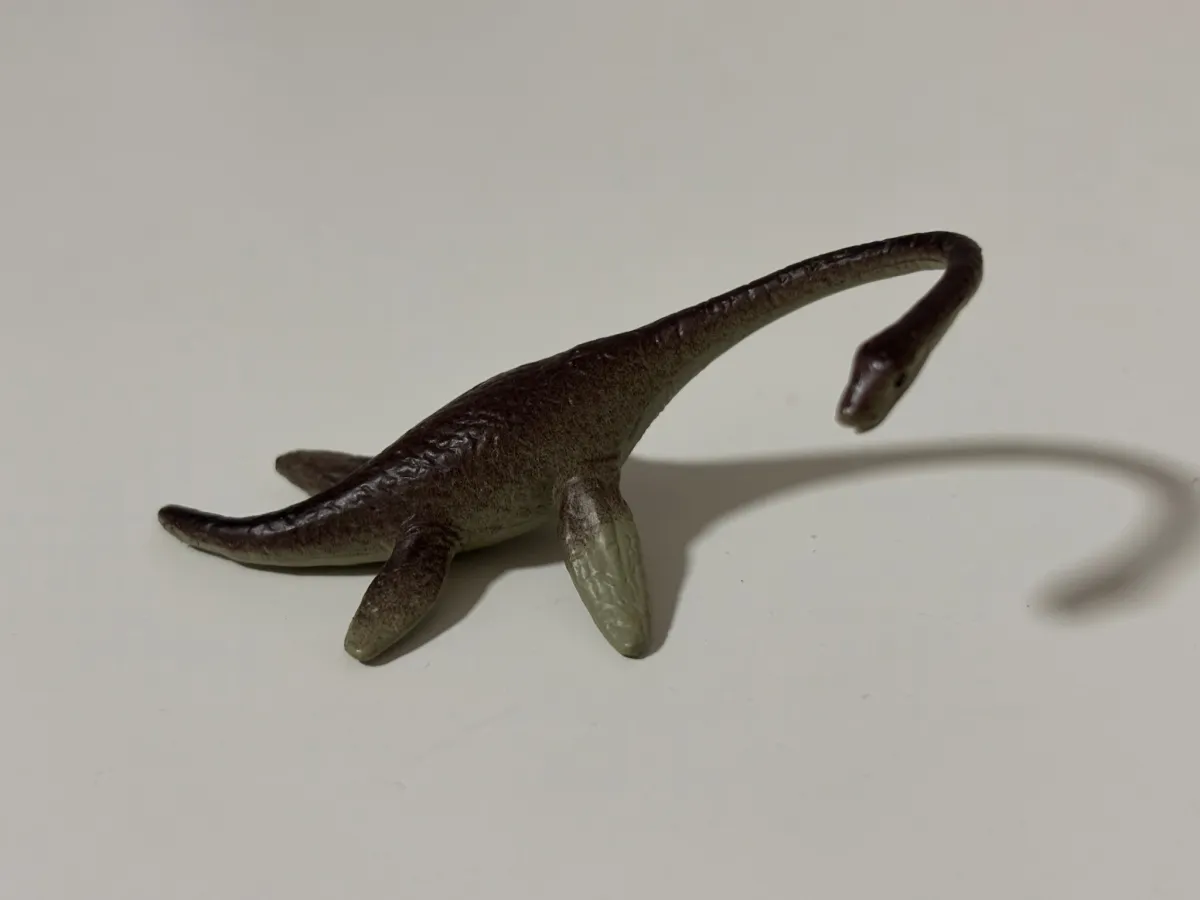
Plesiosauroids: The Real Nessies
The Loch Ness monster (affectionately referred to as Nessie) does not exist. But something even better does! Or, rather, used to. From between 200 and 66 million years ago, long-necked, swimming reptiles known as plesiosaurs existed throughout the world’s waterways. They came in many different shapes and sizes, much more diverse than just the old-fashioned idea of Nessie or other sea monsters.

Plesiosaurs are part of a larger group known as sauropterygia; importantly, they are not dinosaurs. Most of the other members in this group are not super well known by the general public, but include semi-aquatic reptiles, turtle-like animals (but not turtles themselves), and the large, predatory pliosaurs, which are superficially similar to the famous mosasaurs. Plesiosaurs in their colloquial sense are only the long necks of the group. However, the clade Plesiosauria contains both these and the pliosaurs. Here, we will be examining only the true plesiosauroids. This group consists of, according to Adam Smith from the Nottingham Natural History Museum, six different families of animals: Plesiosauridae, Cryptoclididae, Elasmosauridae, Leptocleididae, Polycotylidae, and Microcleididae. Different researchers may differ on the exact valid families, but these six come up frequently regardless. Another important aspect to note is that not every single plesiosaur may fall into these families, as more basal, or early, plesiosaurs may fall just outside them.
First up, Plesiosauridae is a very important family. The most famous family member is Plesiosaurus itself, a small, Early Jurassic representative of the group. Plesiosaurus was the first plesiosaurian to be named, all the way back in 1821 - decades before the first dinosaur was officially named. Originally, the animal was only known from very poor remains. Within a few years, a nearly complete skeleton was discovered in England by Mary Anning, one of the early pioneers of paleontology. Growing up in poverty, she had to sell local fossils she would discover to help her family subsist on. She became moderately known for her discoveries, including the first ichthyosaur to be described as well as the plesiosaur skeleton. The find was controversial at first, and she was not properly credited for her contributions at the time simply due to being a woman. Today, however, she persists as a symbol for women in science and as an important early paleontologist. Plesiosaurus itself maintains its position as a vital early discovery in understanding Mesozoic life.

The next family is Crypotclididae, another very famous group. The type genus is Cryptoclidus, a medium-sized plesiosaur that lived in the Jurassic of England. Like most plesiosaurs, Cryptoclidus had sharp teeth used to hunt for fish, squid, and other aquatic morsels. Its neck, while elongated, was not as long as some of the larger species we’ll be looking at later. Cryptoclidus shared its family with a few other genera, including Abyssosaurus and Muraenosaurus. All of these cryptoclidids are defined by their unique skulls and large orbits. Cryptoclidus itself is very well known, featuring as a complete mounted skeleton in many museums including the American Museum of Natural History (AMNH) in New York City. It also featured in the popular British documentary series Walking with Dinosaurs.
Elasmosauridae is known primarily for the exceedingly long necks of member species. In fact, one of the synapomorphies of the group is the possession of more than forty neck vertebrae (humans have seven, for comparison). These plesiosauroids lived exclusively in the Cretaceous, compared to the Jurassic plesiosaurids and cryptoclidids. Some notable elasmosaurids include Elasmosaurus, Hydrotherosaurus, Thalassomedon, Futabasaurus, and Styxosaurus. Elasmosaurus is likely the most recognizable name of any elasmosaurid, but its remains are fairly poor. Conversely, Hydrotherosaurus has a nearly completely known skeleton to its name. Finally, like Cryptoclidus, the large Thalassomedon is recognizable due to a famous mounted display at the AMNH. In the past, these plesiosauroids were depicted as hunting pterosaurs with their long necks poking out of the water in a Nessie pose. In fact, however, their teeth were perfectly suited for catching smaller prey. They were slow movers and may have used their long necks to “bridge the gap” and catch fish, though the exact reason for their neck length is not certain. Other theories include using it for display, to sift through the ocean sediment, or to get their heads into tight crevices around rocky reefs.

Next is Leptocleididae, another family of Cretaceous plesiosaurs. They are noteworthy for being very different from most other plesiosauroids. That is, they have slightly larger heads and shorter necks than the other families discussed. In fact, they recall the figure of pliosauroids more than they do plesiosauroids! Because of this, the placement of the Leptocleididae family has had some controversy in the past. Despite these superficial similarities, however, Benson et al. views any links that promote the idea that they are pliosauroids as weak. In fact, the authors stated in a 2011 paper that Leptocleididae is a relatively derived, or “advanced,” family of plesiosauroids. Notable genera include Leptocleidus and possibly Brancasaurus, which has a neck that falls on the longer side and may fall just outside the family.
The next group has also historically been lumped into Pliosauroidea due to the length of their necks. The family Polycotylidae may have been even more pliosauroid-like than the leptoclidids, with their larger heads. It is an example of convergent evolution, where different animal groups acquire similar traits independently from each other. Like the previous two groups, this family is also known from Cretaceous period rocks. In fact, they lasted until the end of the age of the dinosaurs, though they peaked in abundance and diversity midway through, according to O’Gorman. The Polycotylidae is defined by skull differences compared to their plesiosauroid cousins. According to Fischer et al., Polycotylidae lies within the larger group of Leptocleidia alongside Leptocleididae. When factoring in the unique neck lengths of these two groups, it is very fitting. The most famous polycotylid is Dolichorhynchops, which lived in a shallow sea that covered large swaths of the American midwest in the Cretaceous known as the Western Interior Seaway. In fact, Dolichorhynchops (referred to as ‘Dolly’ for short) gathered fame through its depiction in the documentary movie Sea Monsters from National Geographic. In the film, ‘Dolly’ appeared alongside the elasmosaurid Styxosaurus as well as other non-plesiosauroid sea creatures.

Finally is the Jurassic family Microcleididae. According to Adam Smith, Microcleidus itself was originally interpreted as Plesiosaurus. In the late 1800s, two Plesiosaurus species were reinterpreted as two Microcleidus species. Historically, the two species were differentiated by their limbs, but Smith believes that more modern and extensive examination is required. According to Benson, Evans, and Druckenmiller in 2012, Microcleidiae is the sister group to the more derived cryptoclidids among Jurassic plesiosauroids. This relationship means that they share a more recent common ancestor than to the plesosaurids. As one may assume, the most notable microcleidid is Microcleidus itself.
As one can see, Plesiosauroidea is much more than simple Loch Ness monster clones. While famed for their long necks, plesiosauroids come in a wide variety of shapes and sizes, ranging temporally from the Late Triassic all the way to the Late Cretaceous. While not dinosaurs themselves, any reconstruction from the time of the dinosaurs would be incomplete without these long-necked swimmers!

References:
Benson, Roger B. J., et al. “A New Leptocleidid (Sauropterygia, Plesiosauria) from the Vectis Formation (Early Barremian–Early Aptian; Early Cretaceous) of the Isle of Wight and the Evolution of Leptocleididae, a Controversial Clade.” Journal of Systematic Palaeontology, vol. 11, no. 2, 11 Dec. 2012, pp. 233–250, https://doi.org/10.1080/14772019.2011.634444.
Delano, Marfe Ferguson. Sea Monsters: A Prehistoric Adventure. National Geographic Books, 2007.
Eylott, Marie-Claire. “Mary Anning: The Unsung Hero of Fossil Discovery.” Natural History Museum, 9 Mar. 2018, www.nhm.ac.uk/discover/mary-anning-unsung-hero.html.
Fischer, Valentin, et al. “The Evolutionary History of Polycotylid Plesiosaurians.” Royal Society Open Science, vol. 5, no. 3, Mar. 2018, p. 172177, https://doi.org/10.1098/rsos.172177.
Ketchum, Hilary F., and Roger B. J. Benson. “Global Interrelationships of Plesiosauria (Reptilia, Sauropterygia) and the Pivotal Role of Taxon Sampling in Determining the Outcome of Phylogenetic Analyses.” Biological Reviews, vol. 85, no. 2, May 2010, pp. 361–392, https://doi.org/10.1111/j.1469-185x.2009.00107.x.
O’Gorman, José P. “Polycotylidae (Sauropterygia, Plesiosauria) from the La Colonia Formation, Patagonia, Argentina: Phylogenetic Affinities of Sulcusuchus Erraini and the Late Cretaceous Circum-Pacific Polycotylid Diversity.” Cretaceous Research, vol. 140, 22 Dec. 2022, p. 105339, www.sciencedirect.com/science/article/pii/S0195667122002038?casa_token=BpRg7ps4UBcAAAAA:CtjDZGdLkzGOSGMAxm4Dzpbic6_t4MXRc3BLcGedO32YrjvAP7GYMlkkLvJPXtazDJ-xK281Mg, https://doi.org/10.1016/j.cretres.2022.105339.
Smith, Adam. CLADISTIC ANALYSIS of the PLESIOSAURIA (REPTILIA: SAUROPTERYGIA). University of Bristol, Sept. 2003.
---. “Microcleidus – Plesiosaur Directory.” Plesiosauria.com, 2019, plesiosauria.com/directory/genera/microcleidus/. Accessed 30 Nov. 2025.
---. “Plesiosaurus – Plesiosaur Directory.” Plesiosauria.com, 2025, plesiosauria.com/directory/genera/plesiosaurus/.
---. “Why Did Elasmosaurids Have Such a Long Neck?” Plesiosaur Directory, 23 Nov. 2014, plesiosauria.com/why-did-elasmosaurids-have-such-a-long-neck/.
“Some Plesiosaurs May Have Lived in Freshwater River Systems | Sci.News.” Sci.News: Breaking Science News, 29 July 2022, www.sci.news/paleontology/freshwater-plesiosaurs-11047.html.
Picture sources:


Subscribe to Scooby's Prehistory Archives
Never miss a new chance to learn about prehistory!
Copyright 2026. Richie The Dino. All Rights Reserved.